


 Who Are We?
 History
 Our Staff
 Associations
 PSNI
PSNI
 Privacy Policy
 Monitoring centers
 Meeting rooms and auditoriums
 Digital Advertising
 Physical Security
 Personal Workspaces

 Videowalls
 Screens
 Access Control
 CCTV
CCTV
 Projectors
 Audio
Audio
 Automation
 A/V Accessories
 Videoconferencing
 Interior design and furniture
 Corporate
 Government
 Education
 Broadcast
 Financial Services
 Retail
 Gaming
Monitoring Centers
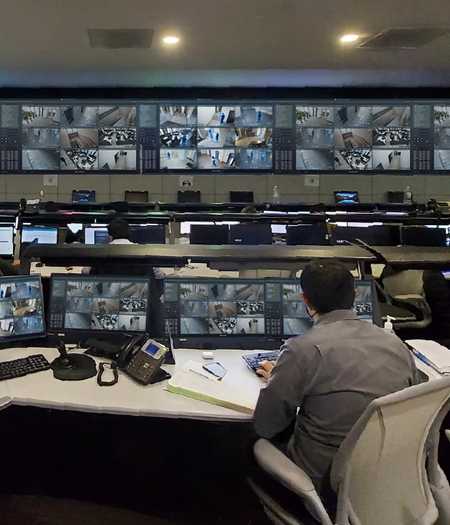
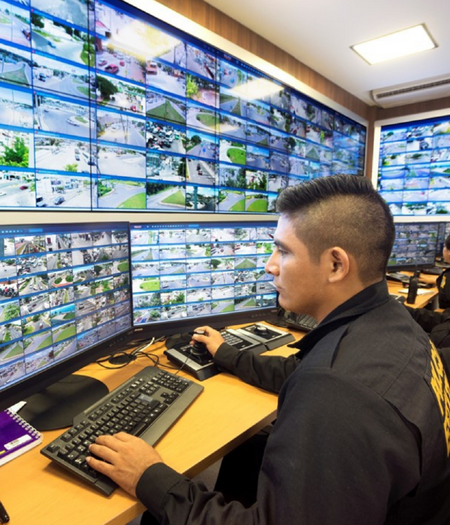
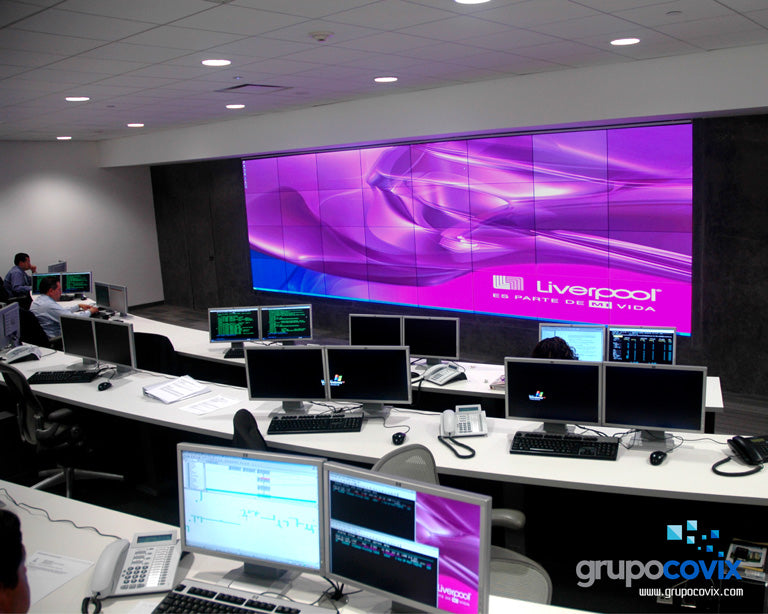
Monitoring Centers or Control Centers , also called Control Rooms , are spaces where a series of operators monitor data or video to react immediately to alarms, emergencies or events using information systems to expedite their interpretation.
With more than 300 Monitoring Centers installed in Mexico, Central and South America, Grupo Covix has become the leading provider of C5 Monitoring Centers in Mexico, Honduras, Colombia and the Dominican Republic .
How to set up a Monitoring Center?
Each Monitoring Center has at least one video wall that displays high-definition signals, computing data, and video according to the user's needs. This video wall can be composed of video cubes or monitor center displays with minimal spacing, using LED, LCD, or PDP technology . In addition to displaying information, a collaboration system with specialized software can be integrated to send and receive data, video, and audio between different rooms, centers, or video walls .
How does a Monitoring Center work?
By integrating all this equipment and software, the Supervisor of the Operators at a Monitoring and Control Center can collaborate and send signals from the various cameras that captured an incident to a Crisis Room or War Room . They can also send these signals to remote sites located in other buildings or cities, allowing them to respond in real time, all with compression and encryption to ensure data security. Visualization, combined with collaboration, are elements that will significantly impact the operation and functionality of the Center.
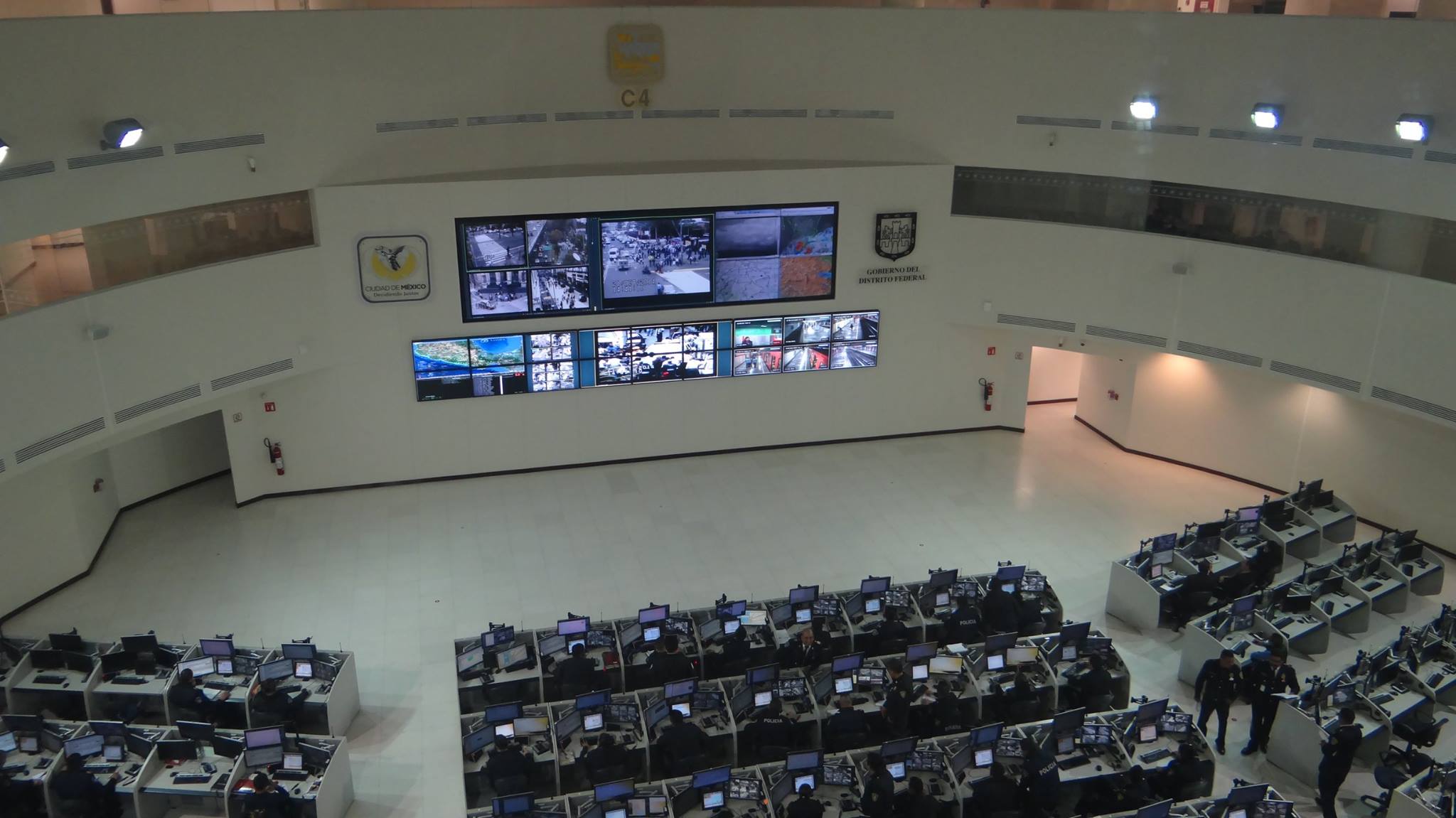
Examples of Monitoring and Control Centers include Command, Control, Communications, and Computing Centers, also known as C4s, and Command, Control, Communications, Computing, and Coordination Centers, better known as C5 Monitoring Centers. These centers can operate at three levels: municipal, state, and federal, and are maintained 24/7 under strict standards and procedures that minimize emergency response times. To achieve this, they are equipped with high-specification audiovisual and physical security equipment, supported by a specialized technical team always ready to provide any necessary maintenance.

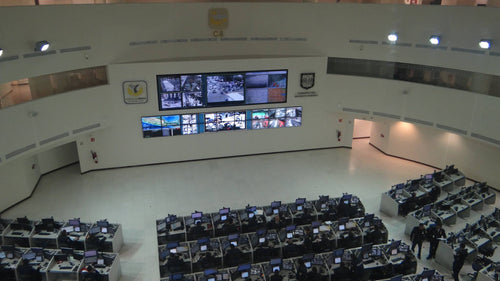
C2´s, C4´s, C5´s
An example of a Monitoring and Control Center is the Command, Control , Communications and Computing Center , also called C4, and the Command, Control, Communications, Computing and Coordination Centers , better known as the C5 Monitoring Center. These Centers can operate at 3 levels: municipal, state and federal, and are kept in operation 24/7 under strict rules and procedures that lead them to reduce their emergency response times to a minimum. To achieve this, high-specification equipment is supplied, both audiovisual and Physical Security , supported by a specialized technical team always ready to provide the required maintenance.
Each Monitoring Center has at least one Video Wall on which high definition, computing and video signals are displayed according to the user's needs. This Video Wall can be composed of video cubes or flat screens with the smallest separation, whether LED, LCD or PDP technology . In addition to displaying information, a collaboration system can be integrated with specialized software that can send and receive data, video and audio between different rooms, centers or video walls . In this way, the head of the operators in a Control Room can send signals from the cameras that captured an incident to the Crisis Room. It can also be sent to remote sites located in other buildings or other cities, and these in turn respond in real time, all with compression and encryption that always maintains data security. Visualization, hand in hand with collaboration, are elements that will impact the operation and functionality of the Center.
Indoor and outdoor cameras, PTZ or fixed, analog or digital, as well as DVRs with their different capabilities, are an integral part of our CCTV solutions. Access Control is another core component for Physical Security solutions. Biometric readers, among other technologies, allow safeguarding access to private spaces.
If you want to know how a Monitoring Center works or have questions about how to set up a Monitoring Center , come to us so we can advise you on the best technology and equipment for your C5, C4 or C2.

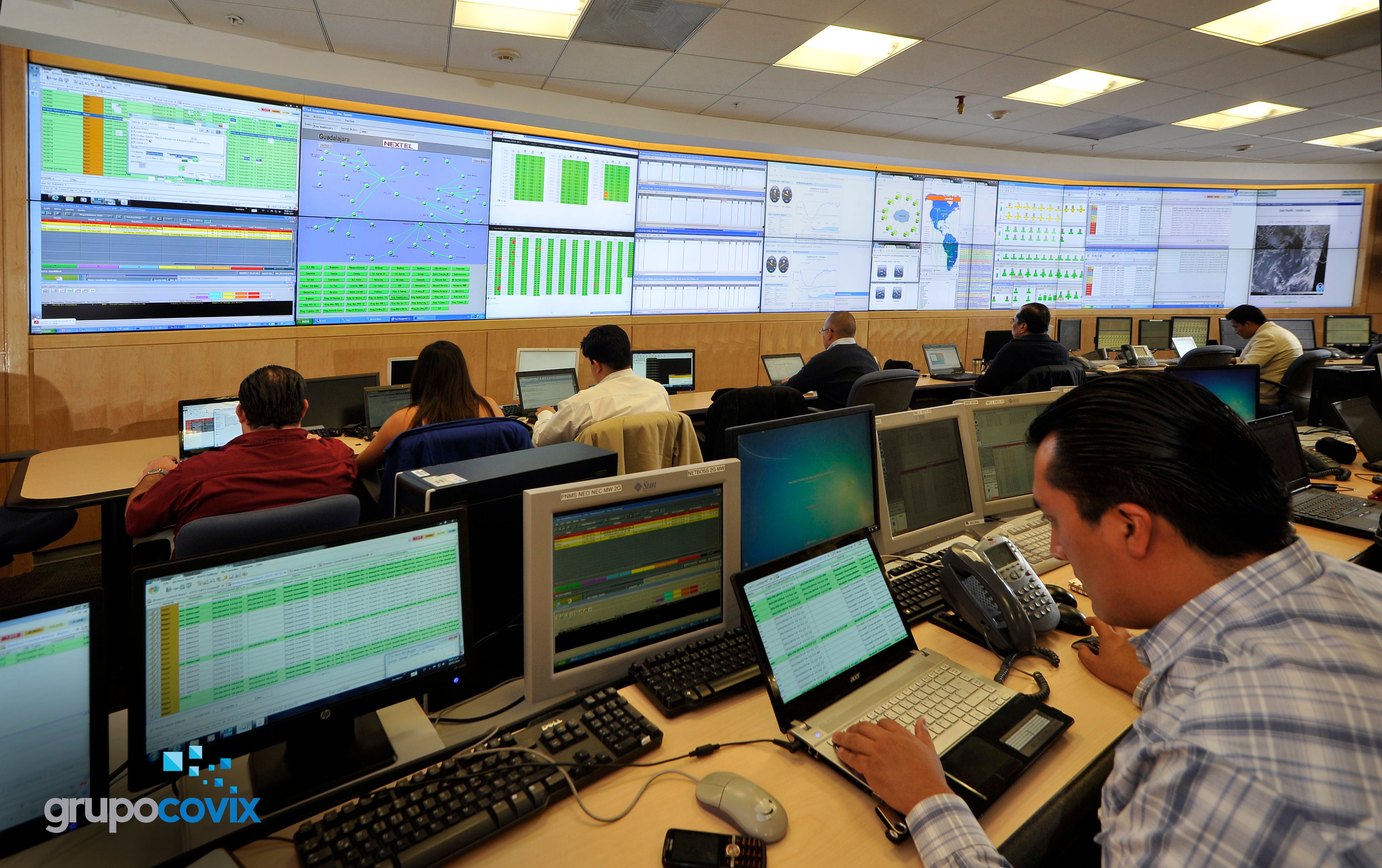
NOC's
What is a NOC?
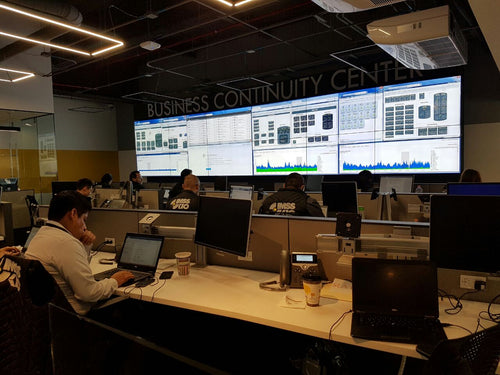
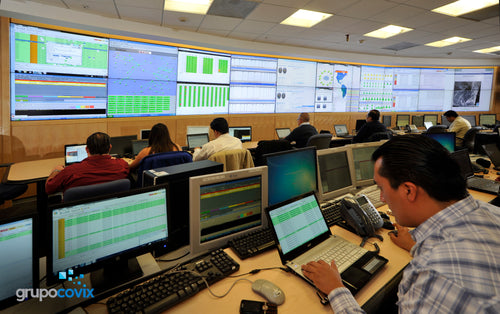
Called by its acronym in English NOC (Network Operation Center), these Centers are used to monitor networks.
Created and designed to address problems in network systems, telecommunications and satellite infrastructure.
These Centers have large infrastructure and technology equipment for security such as: Screens for Monitoring Centers , Videowalls , Access Control , Security Equipment, Data Encryption, Power Backup Systems, Fire Systems, CCTV and Video Surveillance Systems, Networking Equipment, etc. to ensure proper operation since they handle highly relevant information.

SOC´s
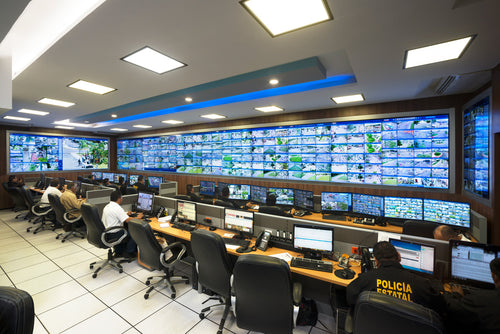
What is a SOC?
Named after its acronym in English SOC (Security Operation Center) used for Physical Security Monitoring . Created to protect the most important elements of a public or private Institution, the information and its people, having as its main objective, to Centralize, Monitor and Prioritize the Security Systems in order to keep them away from unnecessary threats or risks.
Designed to operate 24 hours a day, these are work centers designed to ensure the security of their end users. They are generally accompanied by specialized software for monitoring Physical Security Systems , also called PSIM (Physical Security Information Management) . This software is usually the cornerstone for monitoring failures in the SOC Monitoring Center .
SOCs (Security Operation Centers) have infrastructure and technology equipment for security in information systems such as: Videowalls , Access Control , Security Equipment, Data Encryption, Power Backup Systems, Fire Systems, CCTV and Video Surveillance Systems, Networking Equipment, etc., and technological equipment in general that will ensure the correct operation of the systems since they handle highly relevant information.


SCADA
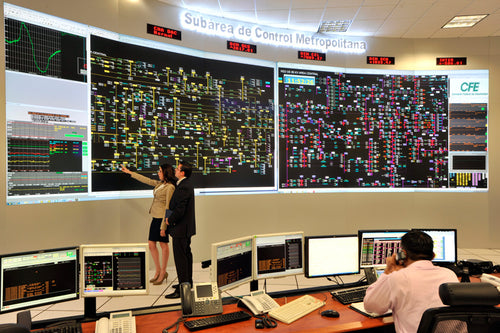
What is SCADA?
SCADA , Supervisory Control And Data Acquisition , is a concept used in computer software that allows industrial processes to be controlled and monitored remotely. Visually, SCADA shows images with hundreds of colored lines that connect different modules or components, usually on a black background. The Energy Sector, specifically CFE and PEMEX in our country, use SCADA software to supervise and monitor their facilities.
High resolutions are required to monitor all the information that SCADA software displays. Colored lines that intersect and cross to connect different components remain static for long periods of time, which can cause images to "burn in" or "stick" on screens. This phenomenon is known as burn in, image sticking, or temporary image retention (TIR), and is most commonly seen on plasma screens, where it is appropriate to say that the phosphor burns out. On LCD screens (even those with LED backlighting), the image retention phenomenon occurs, an effect that is counteracted by turning off the screens for a few hours a day. The most appropriate way to eliminate this retention effect on an LCD screen is to use screens that have external electronics, that is, to remove the power supplies and digital video inputs from the screen chassis, mounting them in a rack located in a site with controlled conditions.
Throughout its history, Covix Group has installed dozens of SCADA Monitoring Centers . It did so in the 1990s using rear projection technology, and was a pioneer in plasma, LCD, and LED video cube technologies, until arriving at DirectView LED , which represents the most recent technology for this application and with which image retention is completely avoided.


Call Centers
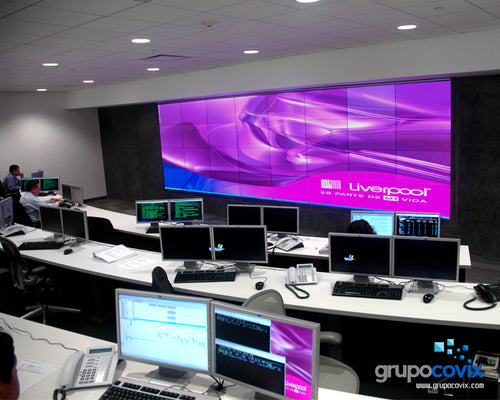
Call Centers or CATs (Telephone Service Centers) are used as telephone call centers for making (outbound) or receiving (inbound) calls with the purpose of serving clients (external or internal), end users of some equipment or service, associated companies, business partners, etc. where they generally work 24 hours a day, 365 days a year.
Currently there are different types of Call Centers where various concerns or services are addressed, such as: cardholder support, order taking or tracking (CEDIS), claims reporting and handling (Insurance), personalized assistance services, attention and reception of emergency calls, reception of complaints or questions, reception of emails, text messages (SMS), instant messaging (whatsapp), among others.
These Monitoring Centers or Call Centers are integrated with different equipment and Visualization and Collaboration Systems such as 24/7 use screens, video walls, 24/7 monitors, audio and microphones , A/V accessories , Interior Design and Furniture for Call Centers, etc.
UPS / No break
What is a UPS?
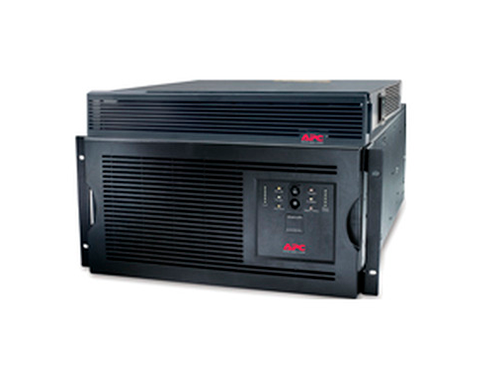
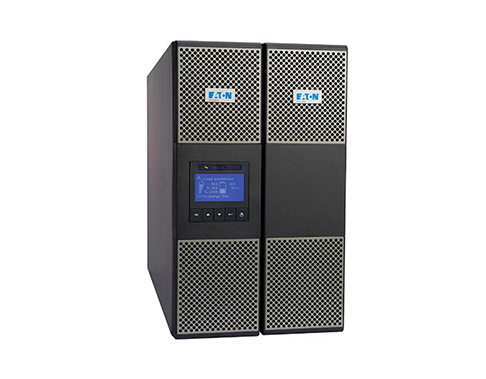
An uninterruptible power supply (UPS) is a device that provides backup power to electronic equipment in the event of a power outage. These devices are also known as surge protectors or UPS systems for professional use. Their main function is to ensure that connected devices continue to operate without abruptly shutting down during a power outage, preventing data loss or hardware damage.
The main components of a UPS include:
- Battery: Stores energy that is used when there is an interruption in the electricity.
- Inverter: Converts stored direct current (DC) energy into alternating current (AC), which is used by most devices.
- Voltage regulator: Protects against voltage spikes or drops, stabilizing the power supply.
UPS systems are commonly used to protect servers, network equipment, computers, and sensitive electronic devices in Crisis Rooms , Monitoring Centers , Data Centers and other critical environments.